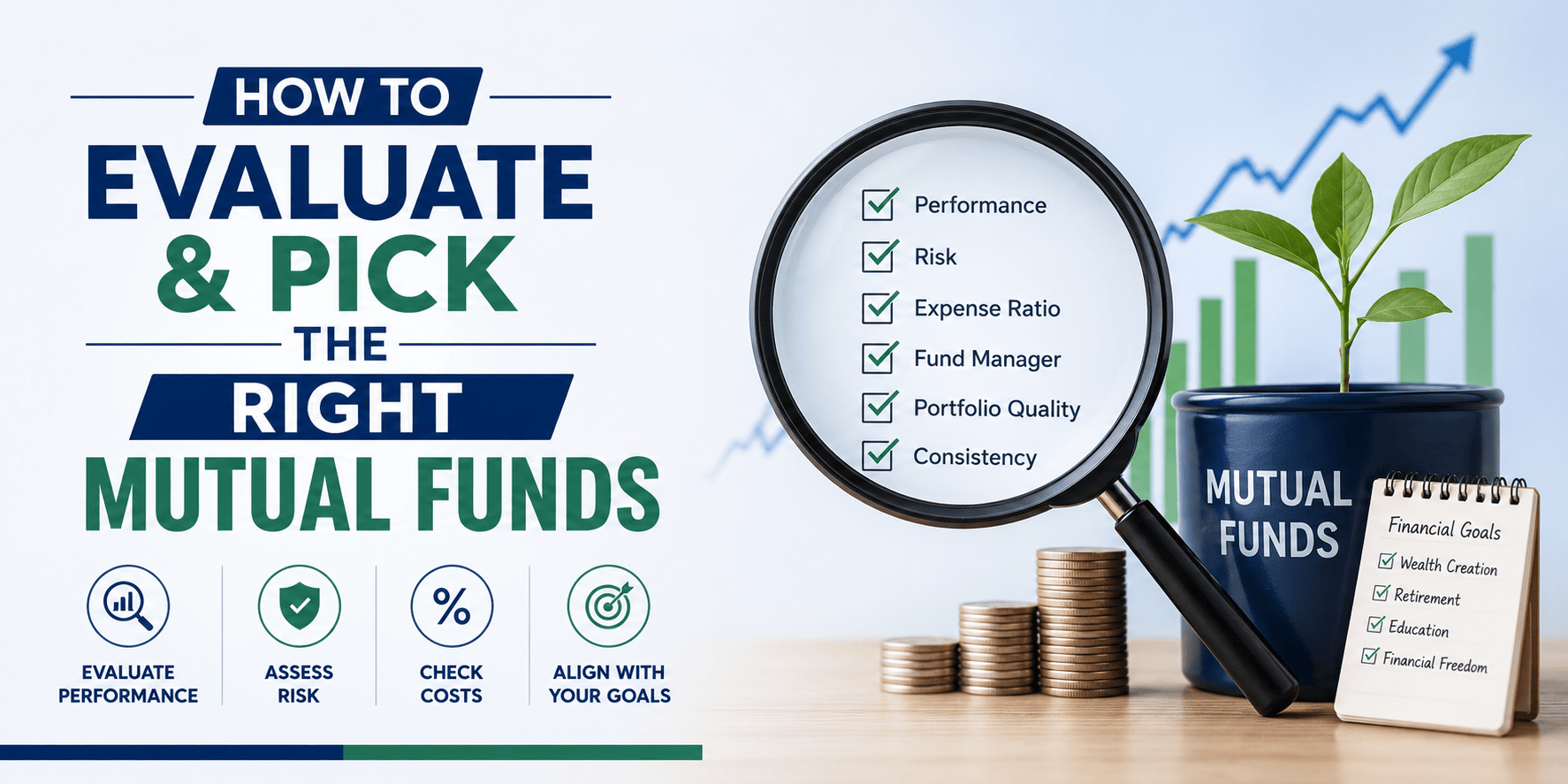
Ever feel like picking a mutual fund is a bit like choosing a place to eat in a city you’ve never visited? There are hundreds of choices, everyone has a different opinion, and all the menus start to look the same after a while. But don’t worry—once you look past the jargon, there’s a really simple, repeatable path you can follow. Whether you’re just starting out or looking to sharpen your strategy, this guide will help you evaluate and pick funds with total confidence.
1. It’s About Your Goals, Not the Fund
The biggest mistake I see people make is hunting for the “best” mutual fund before they even know what they need it for. It’s like buying a great pair of hiking boots when you actually need to go for a swim! Before you start looking at lists, ask yourself these three things:
- When do I need this money? (Is it months or years from now?)
- How much “rollercoaster” movement can I handle without getting scared?
- What’s the big picture—retirement, a down payment, or just building general wealth?
Your answers will help you find the right fit automatically:
|
Time Horizon |
Risk Tolerance |
Best Fund Category |
| Short (1–3 years) |
Low |
Debt / Liquid Funds |
| Medium (3–5 years) |
Moderate |
Balanced / Hybrid Funds |
| Long (5+ years) |
High |
Equity Funds (Flexi-cap) |
2. Use Fund Screeners as Your Starting Shortlist
Think of fund screeners as your investment GPS. They won’t drive the car for you, but they’ll get you to the right neighborhood fast. Websites like Morningstar, Groww, or ET Money let you filter through thousands of options based on size, risk, and cost. In just a few clicks, you can turn a mountain of 3,000+ funds into a small shortlist of 10 or 15 great candidates.
Here are the filters we recommend using:
- Fund category (like stocks, bonds, or a mix of both)
- Experience: Look for funds with at least a 3-year track record
- AUM (Assets Under Management): You want a fund that’s big enough to be stable, but not so giant that it gets slow
- Expense ratio: The lower the better—this is essentially the “service fee” you pay
- Long-term performance: Check the 5-year returns against other similar funds
3. Understanding the “Health Vitals” of a Fund
The numbers tell a story, but you have to know what to look for. Here are the simple metrics that help you spot a winner:
Expense Ratio
This is the annual fee the fund takes to manage your money. For active funds, aim for under 1%. For index funds (which just track a market), try for below 0.3%. Pro tip: “Direct” plans are cheaper because they don’t pay commissions to middlemen.
Portfolio Churn Rate
Think of this as how often the fund manager goes shopping. High churn (over 100%) means they are buying and selling stocks constantly, which adds hidden costs. You want someone with a disciplined plan, not a restless trader.
Sharpe Ratio
This sounds technical, but it’s just a measure of “bang for your buck.” It shows how much return the fund gets for the risk it takes. A higher Sharpe ratio is great—it means the fund is smart about the risks it picks.
Standard Deviation
This tells you how bumpy the ride is. If you prefer a smooth journey over a roller-coaster, look for a lower standard deviation.
Alpha
Alpha is the “extra credit” the manager earned. Positive alpha means they beat the market average; negative alpha means you might be better off with a simple index fund.
4. Look for Returns Consistency, Not Just Peak Returns
If a fund had one amazing year but then fell flat, it might have just gotten lucky. You want a fund that is consistently good, year after year. Here’s how to check for that “stamina”:
- Look at 3-year and 5-year returns—don’t just get dazzled by last year’s flashy numbers
- See how it handled tough times, like the 2020 crash. Did it protect your money well?
- Check “rolling returns”—this shows what the average investor might have earned at any given time, which is much more realistic
- Make sure it stays in the top tier of its group over several years
5. Know The Fund Manager
With most funds, the manager is the engine. Even a great car won’t get far with a bad driver. Look for these signs of quality:
- How long have they been there? If a fund has great 5-year returns but the manager just joined yesterday, those returns don’t really belong to them
- Do they have a clear style? You want someone who sticks to their guns, not someone who switches strategies every time the wind changes
- Check their history—have they managed other funds successfully through both good and bad markets?
Quick tip: For index funds, the manager doesn’t matter much—just focus on low fees and how closely they track the index!
6. Peek Under the Hood with Reports
Every month, funds release a “factsheet.” Most people ignore these, but they are full of gems! They tell you exactly what stocks the fund owns, which industries it’s betting on, and what the manager thinks about the future.
Things to look for:
- What are the top 10 companies they own? Are they too reliant on just one or two?
- Sector allocation: Are they betting heavily on tech, banking, or healthcare?
- Any big changes from last month? Sudden moves can be a red flag
- How much cash are they holding? Too much cash might mean they can’t find anything good to buy
7. The Final “Side-by-Side” Test
Once you have your final 3 or 4 choices, put them next to each other using a comparison tool. Looking at them side-by-side makes the best choice much clearer. Compare things like:
- Risk-adjusted returns (remember the Sharpe ratio?)
- The difference in fees—small percentages add up over time!
- How well they “captured” the market ups vs. downs
- Consistent ranking: Does it stay near the top of its category?
Bonus Tips: Common Traps to Avoid
|
Frequently Asked Questions (FAQs)
1: What is the most important metric when evaluating a mutual fund?
There is no single silver-bullet metric, but if you had to prioritise one, focus on risk-adjusted returns over a 5-year period (Sharpe ratio combined with consistent category ranking). This tells you whether the fund is generating returns worth the risk it is taking, over a long enough period to filter out luck.
2: How many mutual funds should I hold in my portfolio?
For most individual investors, 3–5 funds across different categories is ideal. More than that and you are likely duplicating exposure without gaining meaningful diversification. A typical portfolio might include one large-cap equity fund, one flexi-cap fund, one debt fund, and an optional small-cap or hybrid fund.
3: Should I prefer Direct plans or Regular plans?
Always choose Direct plans if you are comfortable making decisions independently. Direct plans have no distributor commission, so their expense ratios are 0.5%–1% lower than Regular plans. Over 10–20 years, that difference compounds into a significant sum.
4: How often should I review my mutual fund portfolio?
A quarterly check-in to read factsheets and an annual in-depth review is sufficient. Avoid reviewing daily or monthly — short-term NAV fluctuations are noise, not signal. Trigger a deeper review only if the fund manager changes, the fund undergoes a strategy shift, or the fund underperforms its benchmark for three consecutive years.
5: Is it safe to invest in a new mutual fund with a short track record?
Generally, no. A fund needs at least 3 years of live performance across different market cycles to be meaningfully evaluated. New Fund Offers (NFOs) can be tempting due to low NAVs, but NAV price itself is irrelevant. Stick to established funds unless the NFO fills a very specific gap in your portfolio.
6: What is the difference between a fund’s benchmark and category average?
A benchmark is an index (like the Nifty 50 or Sensex) that the fund is compared against based on its stated mandate. The category average is the average return of all funds in the same category. Beating the benchmark is the bare minimum; consistently beating the category average is what separates truly good active funds from mediocre ones.
Final Thoughts
Picking funds is part science and part patience. The science is in checking the fees and ratios, but the wealth comes from giving your choices time to grow. Know your goals, trust your process, and remember: the most successful investors are often the ones who do the least tinkering.
No algorithm can replace the clarity of knowing *why* you are investing. Use these tools, be patient, and watch your wealth build quietly over the years.